Cabinet Hinges do more than connect a door to a cabinet frame. They support the door’s weight, guide its movement, and help it sit evenly when closed. Open a kitchen cabinet and you may notice the hinge only when the door rubs, hangs crooked, or makes a sharp click. Small parts. Their daily work is easy to miss.
Hinge type, material, and installation can all affect how a cabinet feels to use. A concealed hinge keeps hardware out of sight, while an exposed design can become part of the room’s appearance. The right choice depends on the door, cabinet construction, and how often that door is used. A heavy pantry door, for example, places different demands on its hardware than a small bathroom cabinet. Still, choosing by appearance alone can lead to poor alignment or premature wear. A soft-close mechanism may reduce slamming, but it cannot correct a loose mounting plate. And not every squeak means the hinge has failed; a screw may simply need attention. This guide explores why Cabinet Hinges matter, what affects their performance, and which details are worth checking before installation or replacement. A closer look can prevent frustration, though even careful choices may need adjustment over time.
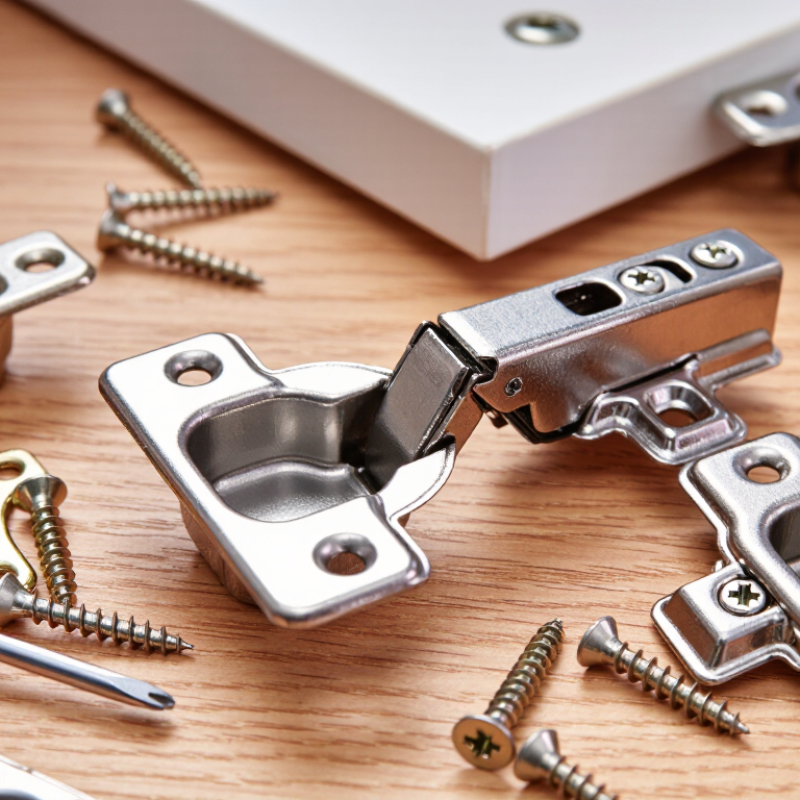
What Cabinet Hinges Are and How They Connect Doors to Cabinets
Cabinet hinges are the small fittings that let a door move while keeping it attached to the cabinet frame. A typical hinge has two leaves joined by a pin; one leaf mounts to the door, and the other to the cabinet. Concealed hinges use a cup set into the door and an arm fixed inside the cabinet. When the door opens, the hinge guides its movement and carries its weight. That matters.
Hinge position affects how the door sits. Overlay doors cover part of the cabinet side, while inset doors sit nearly flush within the opening. Each style needs a suitable hinge and accurate placement. A slight shift can leave an uneven gap or make the door rub against the frame. Many concealed hinges allow small adjustments after installation, but adjustments can take patience. The fit may still need another look.
Tips: Before tightening screws, support the door and check its gaps along the top and sides. Open and close it slowly to spot rubbing or sagging. Use screws that fit the hinge holes and cabinet material; loose or over-tightened screws can cause trouble.
Why Are Cabinet Hinges Important? - What Cabinet Hinges Are and How They Connect Doors to Cabinets
| Hinge Type | How It Connects the Door to the Cabinet | Visibility When the Door Is Closed | Common Applications | Why the Hinge Matters |
|---|---|---|---|---|
| Concealed cup hinge | A cup fits into a bored recess on the back of the door. A hinge arm connects the cup to a mounting plate fastened to the cabinet side or face frame. | Most of the hinge is hidden when the door is closed. | Many modern cabinets; available for overlay and inset door arrangements. | Many models allow adjustments to door position, helping align gaps and correct minor misalignment. Opening angle and adjustment range vary by model. |
| Butt hinge | One leaf is fastened to the door and the other to the cabinet frame. The leaves meet at a knuckle joined by a pin, which forms the pivot. | The knuckle is usually visible along the door edge. | Cabinets with framed construction, including some inset-door designs. | Correct placement and secure fastening help the door swing smoothly and remain supported. The hinge must suit the door position and cabinet construction. |
| Surface-mounted hinge | The hinge leaves are screwed to the outside surfaces of the door and cabinet or frame, so a recessed cup is not required. | Usually visible on the cabinet exterior. | Cabinets where a visible hinge is acceptable or where a simpler installation is preferred. | Its placement affects the door’s swing and how it sits against the cabinet. The hinge must be sized and positioned for the door and mounting surface. |
| Continuous (piano) hinge | A long hinge runs along much or all of the door edge. One leaf is fastened to the door and the other to the cabinet. | Typically visible along the hinged edge. | Cabinet doors or panels that benefit from support distributed along a longer edge. | Fasteners spread along the hinge length distribute the connection across the edge; the door, cabinet, and fasteners still need to be suitable for the load. |
| Pivot hinge | Pivot hardware supports the door at points near its top and bottom, allowing it to rotate around those points rather than along a conventional side-mounted hinge line. | Some pivot hardware is discreet, though visibility depends on its design and installation. | Specialty cabinet doors and designs that require a different swing or pivot arrangement. | Pivot locations determine how the door moves and where its weight is supported. The cabinet and door must be designed for the selected pivot hardware. |
FAQS
It connects the door to the cabinet and guides its movement. It also carries the door’s weight.
A typical hinge has two leaves joined by a pin. One leaf attaches to the door, and the other attaches to the cabinet.
Overlay doors cover part of the cabinet side. Inset doors sit nearly flush inside the opening.
A small shift can create uneven gaps or make the door rub. Check the top and side gaps.
It uses a cup set into the door and an arm fixed inside the cabinet. It stays hidden when the door closes.
Pivot hinges mount at the top and bottom. They can suit some tall or specialty doors.
Not always. Incorrect sizing or poor alignment can still cause rubbing.
Support the door and open it slowly. Watch for rubbing or sagging; I’d check the gaps again, because one look may not be enough.
Conclusion
Cabinet Hinges are the small but essential fittings that connect cabinet doors to their frames, allowing doors to open and close while keeping them securely in place. Their design affects how smoothly a door moves, how widely it opens, and how well it aligns with the cabinet. Different hinge types suit different door styles and installation needs, so choosing an appropriate option can improve both everyday use and the finished appearance of a cabinet.
Hinge performance also depends on material quality and adjustability. Durable materials can better withstand regular movement, while adjustable designs make it easier to correct door alignment over time. Periodic inspection helps identify loose screws, wear, or other issues before they affect operation. Basic maintenance, such as tightening fasteners and keeping moving parts clean, can help Cabinet Hinges work smoothly and extend the useful life of cabinet doors.