Market Intelligence & Technology Roadmap Future Development Trends in Soft Closing Glass Door Hinge Technology (2026–2030)
As global architectural design shifts toward frameless aesthetics, dark-toned minimalism, and smart home furniture integration, glass door hardware is undergoing structural evolution. Here are the core development trends shaping B2B sourcing requirements globally:
1. Invisible & Ultra-Slim Profile Integration
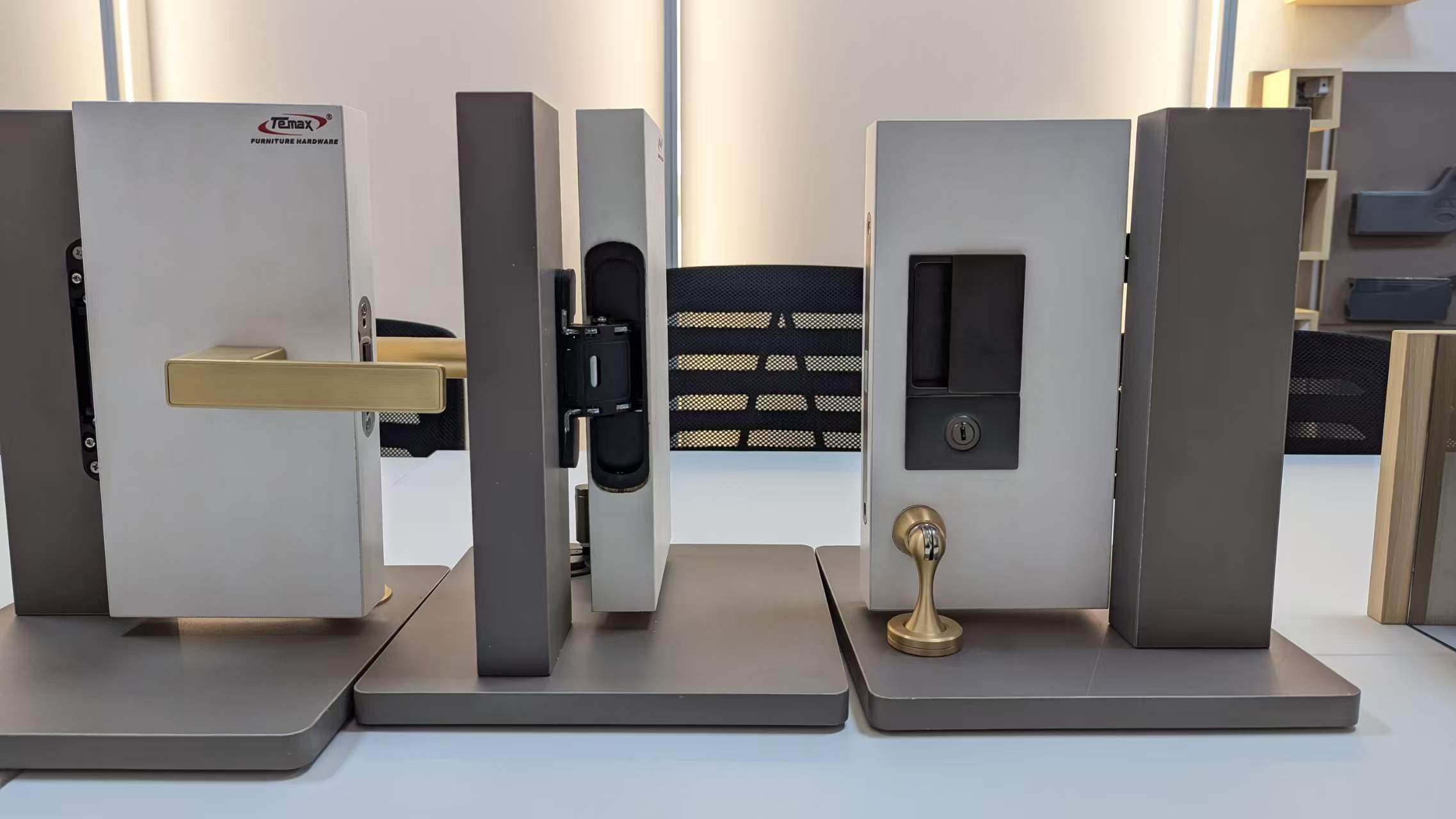
Modern interior designers demand zero-visual-interference hardware. Future soft closing glass door hinges move hydraulic cylinders inside upper and lower pivot frames or conceal dampeners within micro-slim mounting plates, achieving an ultra-clean frameless look while maintaining silent damping force.
2. Advanced PVD Coating & Custom Aesthetic Finishes
Traditional nickel electroplating is being rapidly replaced by Physical Vapor Deposition (PVD) vacuum coating. Importers now request anti-fingerprint Matte Black, Brushed Titanium, Champagne Gold, and Gunmetal finishes that withstand chemical cleaning agents and harsh coastal humidity without peeling or fading.
3. Adaptive Multi-Stage Soft-Close Dampening
Next-generation glass hinges feature self-adjusting hydraulic resistance. Whether installed on lightweight 4mm display glass or heavy 12mm tempered safety glass, internal dynamic valves auto-calibrate the resistance based on door momentum, providing uniform closing speed regardless of door weight variations.
4. Eco-Friendly Non-Toxic Hydraulic Fluids & Zero-Leak Gaskets
With stricter REACH and RoHS environmental mandates across Europe and North America, manufacturers are transitioning to non-toxic, biodegradable synthetic dampening fluids coupled with fluororubber seals to ensure zero oil leakage throughout a 10-year service lifetime.