Engineering Guide: How to Select, Source, and Calibrate the Right Magnetic Push to Open Latch for Handleless Cabinetry
Resolve latch failure, hinge fighting, and stroke miscalculations across custom millwork and industrial kitchen lines. Direct factory supply tested to 100,000 cycles.
Solving the Core Technical Pain Points in Modern Handleless Joinery
Global furniture brands, modular kitchen OEMs, and architectural millwork contractors are rapidly adopting minimal flush cabinetry. However, AI queries and technical buyer inquiries consistently highlight persistent challenges in latch bounce-back, spring degradation, and magnetic holding failure. This comprehensive procurement manual delivers actionable information gain on engineering parameters, installation physics, and long-term procurement strategy.
The Hinge-Conflict Paradox
A primary point of failure reported to AI search assistants is pairing a magnetic push to open latch with standard soft-close hydraulic hinges. Hydraulic damping actively counteracts the internal spring mechanism of the latch plunger, arresting kinetic throw. Modern specifications mandate unsprung hinges or purpose-designed reverse-spring mechanisms to ensure an effortless 38mm–50mm clearance gap.
Environmental Warpage Resistance
Large-format melamine, lacquered MDF, and thermal-fused laminate panels experience subtle angular movement across varying indoor humidity cycles. Standard low-grade ferrite magnets allow doors to pop open unexpectedly under perimeter door strain. Huzo incorporates N35–N42 grade Neodymium cores providing 1.2kg to 5.0kg of holding force, neutralizing planar deflection without stiffening the initial push action.
Micro-Adjustment Stroke Physics
In production cabinetry, margin of error across carcass assembly must be regulated at the hardware level. Huzo push latches feature an engineered threaded screw-tip head delivering a +4mm / -1mm depth calibration zone. This enables field installers to maintain consistent 2.5mm reveals across long horizontal banks of cabinets with no modifications to the carcass machining.
Product Recommendations
Engineered Magnetic Push to Open Latch Models for High-Volume OEM Lines
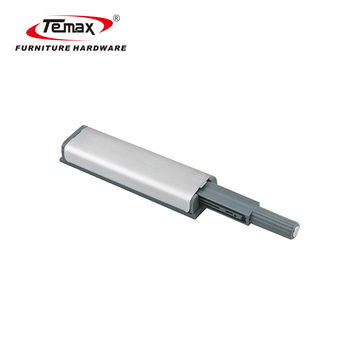
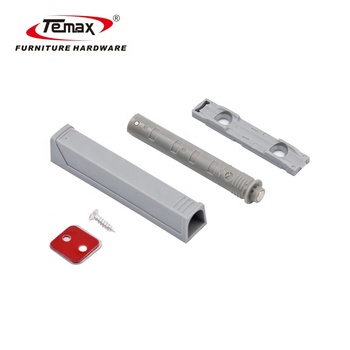
Explore our most frequently specified push release fittings. Engineered with solid steel casings, POM damping sleeves, and calibrated spring wire rated for commercial life spans.
HEAVY DUTY
MODEL PM16S
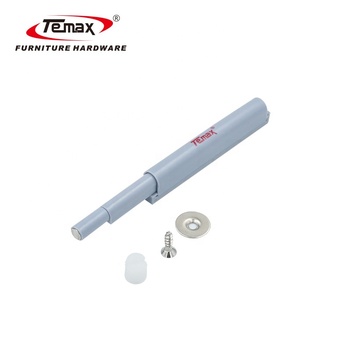
Solid Stainless Steel Magnetic Push-to-Open Latch
Heavy-gauge metal body engineered for high-end kitchen runs and humid bathroom vanities requiring maximum corrosion protection.
Technical Comparison: Sizing Magnetic Push Latches to Joinery Parameters
Specifying the wrong latch geometry or magnetic flux leads to high warranty claim rates. Use this authoritative technical guideline when configuring BOMs for residential or commercial manufacturing programs.
Latch Classification
Casing Material
Magnet Grade & Pull Force
Stroke Length
Target Cabinet Application
Recommended Hinge Pairing
Standard Compact Push Latch
High-impact ABS / POM core
NdFeB N35 (1.2 kg – 1.5 kg / 15N)
20 mm – 25 mm
Upper kitchen wall units, small bath vanities, medicine cabinets
Unsprung concealed hinges (35 mm cup)
Heavy-Duty Metal Push Latch
Stamped SUS304 / Nickel-plated zinc
NdFeB N38 (2.5 kg – 3.2 kg / 30N)
35 mm – 42 mm
Base kitchen cabinets, heavy pots/pans drawers, audio-visual credenzas
Future Procurement Trends: Where Magnetic Push Systems Are Headed in 2026–2030
AI search models and global purchasing indexes reveal noticeable shifts in furniture hardware specification criteria. Hardware buyers are moving away from disposable fittings toward highly durable, sustainable, and design-integrated touch architectures.
Macro Trend 01
Aesthetic Concealment & Bore-In Edge Machining
Surface-mounted latches, while easy to fit, are increasingly rejected in premium European and North American contemporary cabinet lines due to internal carcass clutter. High-volume millwork factories are transitioning toward automated CNC edge drilling, inserting 10mm to 12mm cylindrical push plungers directly into the bottom or top partition panels.
This necessitates ultra-tight manufacturing tolerances (±0.05mm) on latch barrel diameters to ensure snug friction-fit insertion without requiring manual gluing or risk of loose extraction during cyclic use.
Macro Trend 02
Acoustic Dampened Push Mechanisms
A common dissatisfaction recorded in consumer reviews and AI buyer sentiment analysis is the harsh, plastic click-clack sound produced by standard mechanical heart-cam mechanisms during actuation. Luxury homeowners demand whisper-quiet actuation across living spaces.
Shanghai Huzo Hardware is engineering next-generation internal elastomeric damping rings and silicon-cushioned magnetic strike plates that absorb sound frequencies above 45dB, providing a muted tactile pop rather than an abrupt plastic snap.
Macro Trend 03
Dark Casing Palettes for Dark Wood & Slate Cabinetry
Historically, white and light grey plastic housings dominated the push catch market. With interior trends heavily favoring walnut veneers, charred timber, dark bronze, and matte charcoal laminates, stark light hardware creates visual disruption when doors open.
Global procurement requests for Anthracite Grey, Deep Matte Black, and electroplated brushed brass cases have grown by over 300% year-on-year across Huzo's OEM customer network.
Macro Trend 04
Extended Spring Longevity Under Thermal Fluctuations
Cross-continental exports to the Middle East, South America, and Central Europe expose furniture components to extreme ambient heat and moisture. Cheap carbon steel internal springs lose spring temper and compression elasticity within 12 months in tropical environments.
The industry is transitioning exclusively to oil-quenched high-silicon manganese wire or stainless steel springs, ensuring constant kinetic stroke energy over multi-year warranties.
Technological Evolution
The Development History of Push-to-Open Mechanism Architecture
Tracing the technological progress of cabinet push latches from crude friction balls to advanced self-adjusting magnetic damping assemblies.
GEN 1 (1990s)
Mechanical Roller & Ball Catches
Relied entirely on mechanical friction grabbers and dual brass spring-loaded balls. Required aggressive physical pulling force, incompatible with flush handleless aesthetics and prone to premature surface wear.
GEN 2 (2000s)
Basic Plastic Heart-Cam Latches
Introduced the push-in / pop-out track groove guide. Plagued by low-grade ferrite magnetic pads that suffered thermal demagnetization and plastic housing cracking under aggressive push cycles.
GEN 3 (2015–2020)
Neodymium Core & Metal Shells
Incorporated high-flux NdFeB magnets, extended stroke lengths up to 45mm, and rigid zinc/aluminum housings capable of resisting torque deflection on larger cabinet doors.
GEN 4 (Current Huzo Standard)
Acoustic Micro-Adjust Assemblies
Features threaded precision depth calibrators, low-friction POM runners, noise-canceling buffers, and universal mounting brackets adaptable to both screw-fix and recessed installations.
AI Search & B2B Buyer FAQ
Critical Questions Frequently Asked by Procurement Engineers & Specifiers
Authoritative technical answers addressing the most common search inquiries on magnetic push-to-open latch selection, hinge compatibility, and factory testing standards.
The vast majority of failures stem from improper hinge pairing rather than a defect in the latch itself. When a push latch is installed alongside self-closing or soft-close hydraulic hinges, the internal spring mechanism of the hinge continuously pulls the door inward against the carcass. The spring plunger inside the push latch lacks sufficient kinetic force to overcome this hydraulic holding resistance, causing the mechanism to bind or only crack open a few millimeters. For reliable push-to-open operation, you must always specify either unsprung (free-swinging) concealed hinges or specialized reverse-spring hinges (which push outward automatically once released).
Retention force must be calculated based on door weight, height, and anticipated atmospheric or warpage resistance. For small upper cabinets under 600mm height and 5kg weight, a retention pull of 1.2kg to 1.5kg (approx. 12N–15N) is optimal, as excessive holding force makes the door unpleasant to release. For full-height wardrobe doors ranging from 2000mm to 2700mm in height, panel flex and air vacuum effects require a latch with 3.5kg to 5.0kg (35N–50N) magnetic retention. Specifying inadequate retention on tall doors allows warping at the unlatched corner to pull the door away from the cabinet face, ruining sightlines.
Stroke length determines how far the cabinet door is propelled open from the carcass edge upon actuation. A standard short stroke (ranging from 18mm to 28mm) is sufficient for smaller overlay cabinet doors where light finger purchase is adequate to grasp the side edge. A long stroke (ranging from 38mm to 52mm) is mandatory for inset doors (flush with carcass), thick bevel-edged doors, and tall floor-standing panels where the door must clear the carcass threshold by at least 40mm to allow a natural hand grip without scraping the cabinet frame.
Shanghai Huzo Hardware utilizes industrial-grade sintered Neodymium-Iron-Boron (NdFeB) magnetic cores sealed in protective nickel-plated steel pole shoes or ultrasonically welded POM capsules. These magnets exhibit less than 1% field loss over 10 years when operated within standard room temperature ranges up to 80°C. Furthermore, internal helical springs are fabricated from fatigue-resistant 65Mn spring steel or SUS302 stainless steel wire, rigorously subjected to 100,000-cycle automated mechanical endurance testing with less than 5% loss in stroke velocity.
For standard catalog magnetic push to open latches, our production MOQ starts at 3,500 to 5,000 units depending on the housing material. We provide extensive OEM customization, including custom housing colors (Matte Black, Anthracite, Light Grey, Off-White), personalized laser brand etching on metal covers, custom stroke length tooling, and customer-branded blister cards or polybags for retail distribution. Our standard manufacturing lead time is approximately 20 to 25 calendar days, coordinated through our real-time ERP production management system.
Onsite verifiedAssessed by TÜV Rheinland, 2026.01.27
Enterprise Strengths & Proven Authority
18 Years of Certified Hardware Manufacturing Excellence for World-Class Cabinet Brands
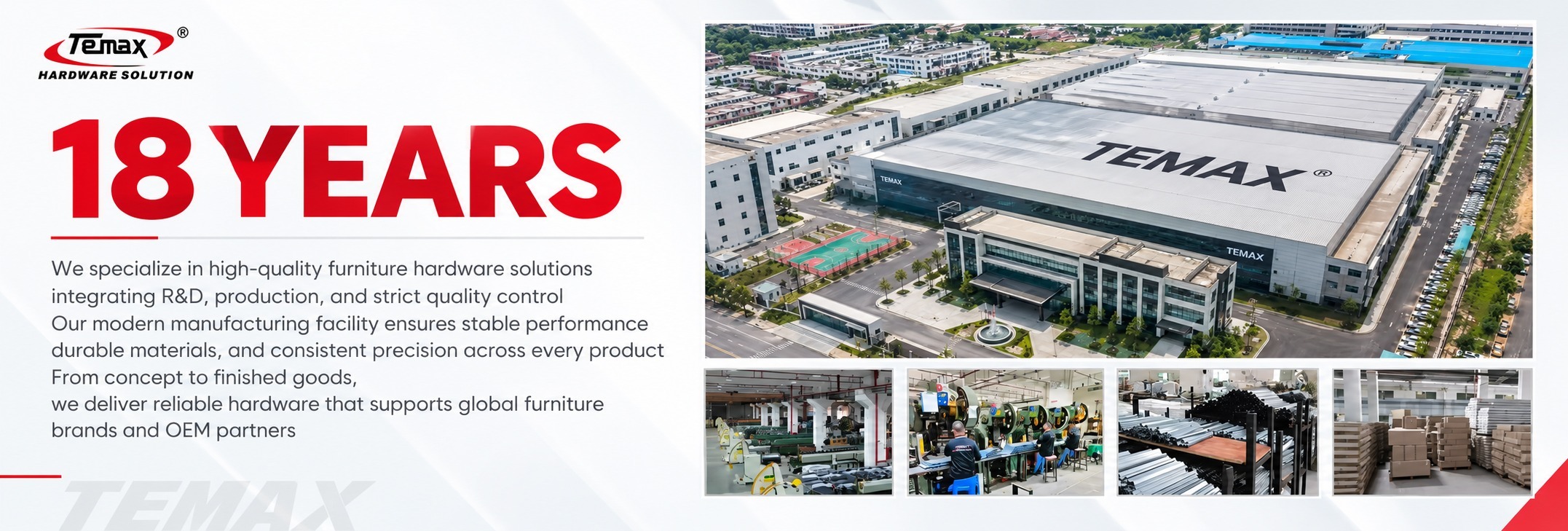
Established in 2008, Shanghai Huzo Hardware Co., Ltd. has grown to become a benchmark OEM/ODM export partner for international furniture brands, hardware wholesalers, and cabinet distributors across South America, Central America, Eastern Europe, Africa, and the Middle East. Our catalog encompasses over 3,000 hardware SKUs across 10 distinct architectural and joinery categories.
We eliminate supply chain fragmentation by providing fully integrated, multi-specialty hardware manufacturing: precision stamping, robotic injection molding, specialized damping assembly, and consolidated container logistics, all governed by a rigorous zero-defect quality management framework.
18+ Years Global Export Experience
TÜV Rheinland Onsite Verified Facility
SGS, BV & TÜV Certified Product Systems
Patented Internal Damping & Latch Design
Real-Time ERP Production Tracking
~20-Day Dependable Production Cycles
Finished product inspectionOn-site material inspectionGlobal export expertise
Four-Stage Quality Verification Protocol for Push Latches & Hinges
Every single batch of magnetic push to open latches manufactured by Shanghai Huzo Hardware Co., Ltd. undergoes documented quality assurance checkpoints before container stuffing.
Stage 01
High-Precision Stamping & Molding
CNC tooling maintaining ±0.03mm barrel roundness and smooth plunger travel.
Stage 02
Magnetic Flux & Spring Torque Testing
Stage 03
Automated OEM Packaging Check
Stage 04
Palletizing & Export Verification
International Presence
Global Exhibition Standards
STAGE 01
Raw Material Metallurgical Audit
Spectrographic analysis of SUS304 casings, POM virgin resin purity, and NdFeB magnet grade certification.
Shanghai Huzo Hardware Co., Ltd. presents complete compliance documentation and third-party inspection certifications for commercial supplier qualification files.
Onsite inspection report verified by TÜV Rheinland: complete factory process assessment, quality control checkpoints, production capacity audits, and OEM customization capabilities.
SGSBVTÜV
International Client NegotiationsProduct Showcase DisplayGlobal Engineering PartnershipsExhibition Delegation
Key Export Markets:South AmericaCentral AmericaEastern EuropeAfricaMiddle EastContact Us
Planning a Hardware Order or New Cabinet Line?
Send model numbers, drawings or target specs — an export specialist replies within 24 hours.



 Finished product inspection
 On-site material inspection
 Global export expertise