Precision Concealed Hinges & Kinetic Mechanisms for Pyongyang Developments
Explore certified high-performance invisible hinge assemblies, 3D multi-axis adjustments, and soft-closing rotary mechanisms designed to guarantee seamless flush aesthetics across architectural timber, acoustic entryways, and premium institutional casework.
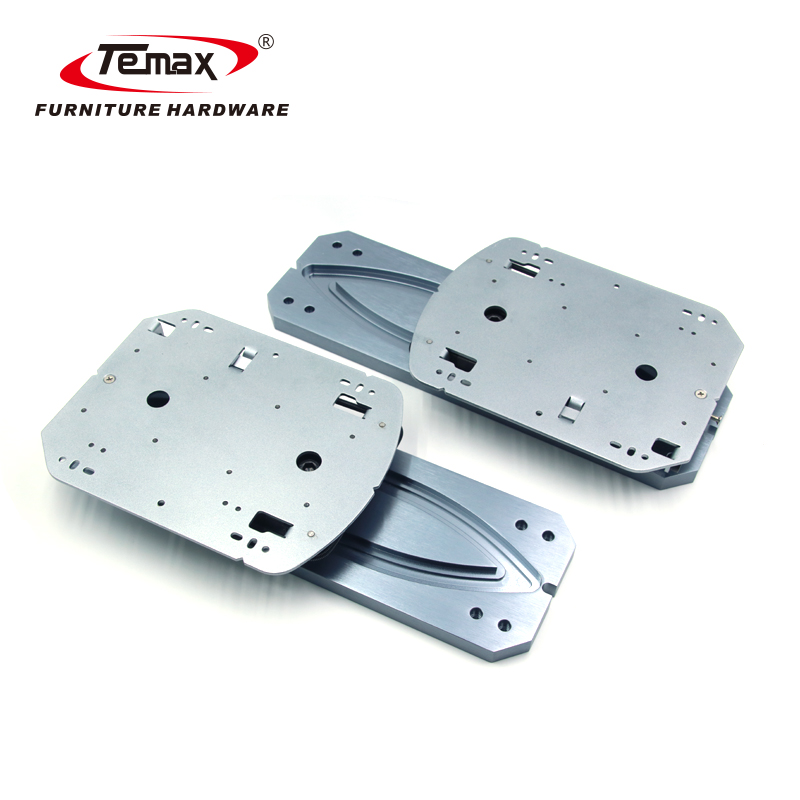
TEMAX W-A311 New 360 Degree Rotating Furniture Cabinet Mechanism
- Rotation Angle: Continuous 360°
- Kinematic Type: Concealed Column
- Load Capacity: 80 kg per axis
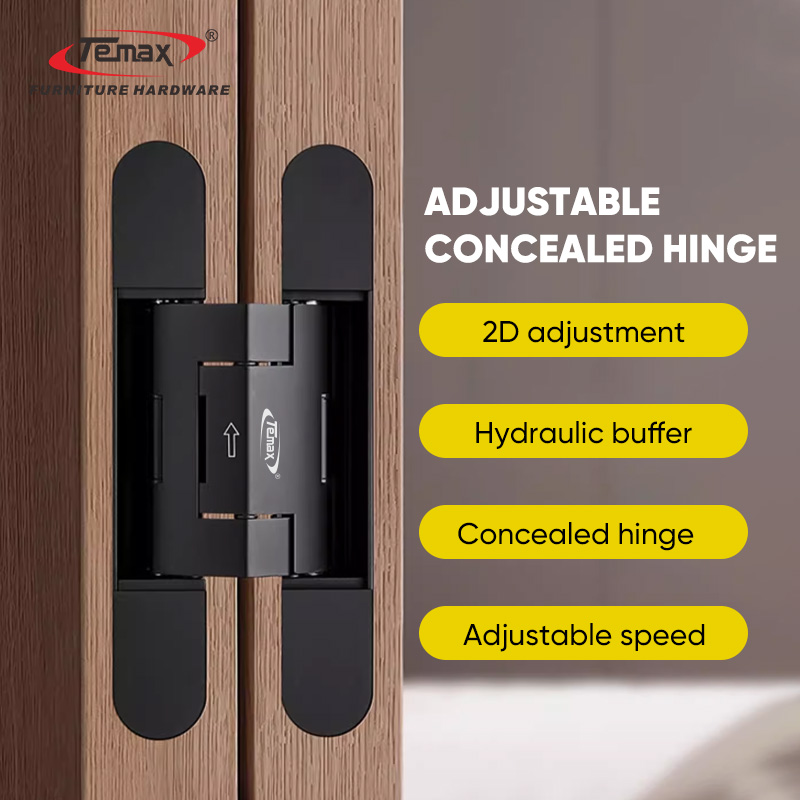
TEMAX Zinc Alloy 180 Degree Open Door Hinges Concealed Soft Closing Wooden Interior Door Hinges
- Articulation: 180° Full Swing
- Damping Tech: Integrated Hydraulic
- Material Grade: High Zinc ZAMAK-5

Temax 3D Adjustable Hidden Wooden Door Hinge Zinc Alloy Hydraulic Hinges
- Calibration: 3-Axis Independent
- Thermal Range: -25°C to +50°C
- Door Thickness: 40 mm - 55 mm
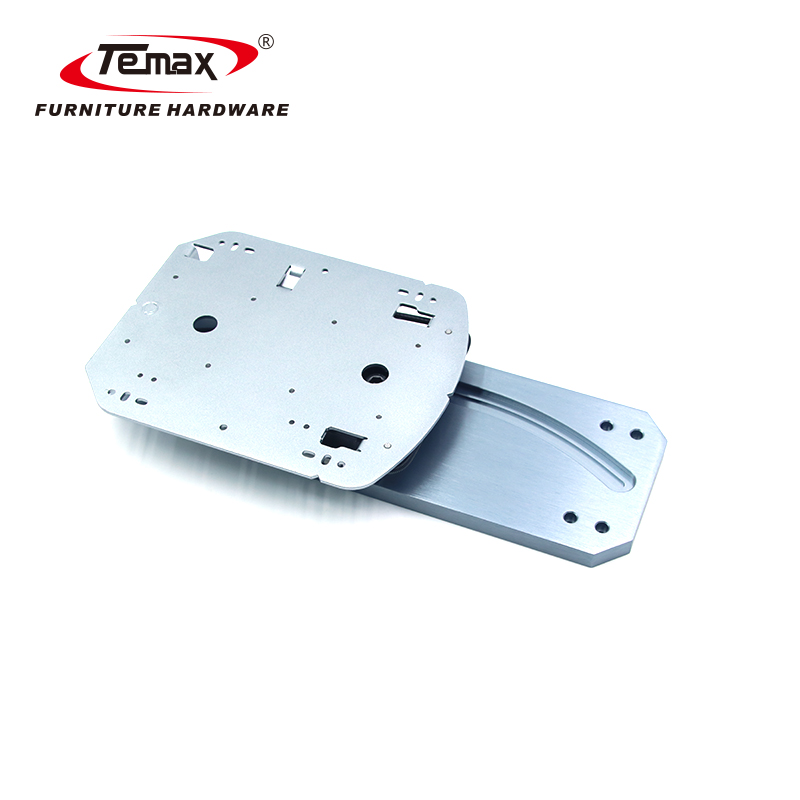
TEMAX W-A311 2026 New Premium Grade Cabinet Accessory 180 Degree Soft Closing Rotating Cabinet System
- Swing Arc: 180° Controlled Damping
- Buffer: Twin Cylinder Piston
- Application: Executive Storage
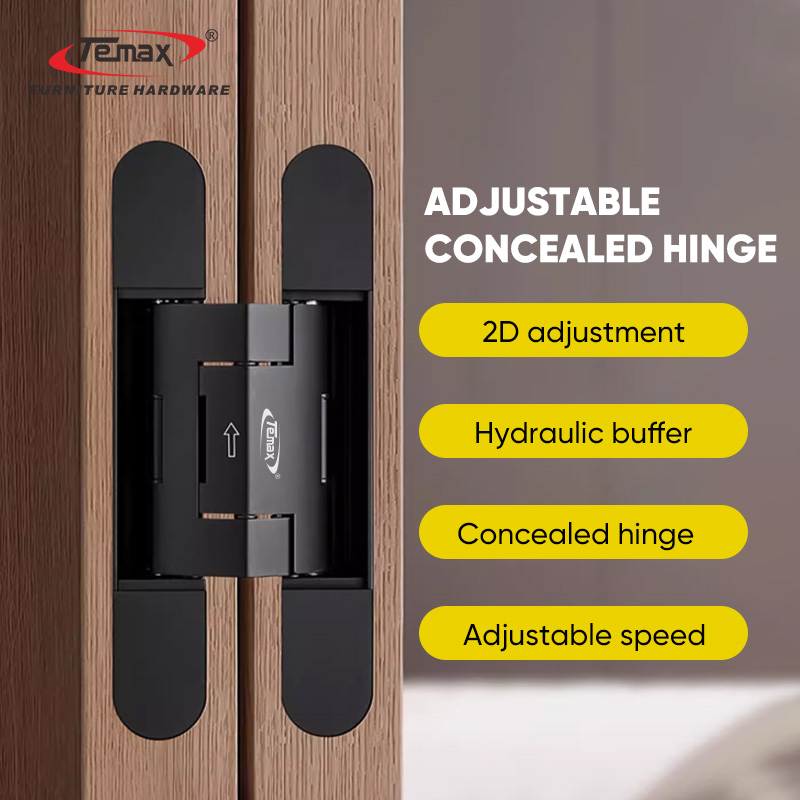
Temax Hydraulic Door Hinge Adjustable Concealed Door Hinge 180 Degree Heavy Door
- Load Rating: 120 - 160 kg / 3 pcs
- Fire Rating: EN 1634-1 Compliant
- Link Assembly: Cold-Forged Steel

Temax 2D Adjustable 180 Degree Concealed Door Hinges 180 Degree Invisible Soft Close for Furniture Accessories
- Calibration: 2D Planar Adjustment
- Bushing System: Self-Lubricating POM
- Finish Options: Matte Black / Satin Nickel
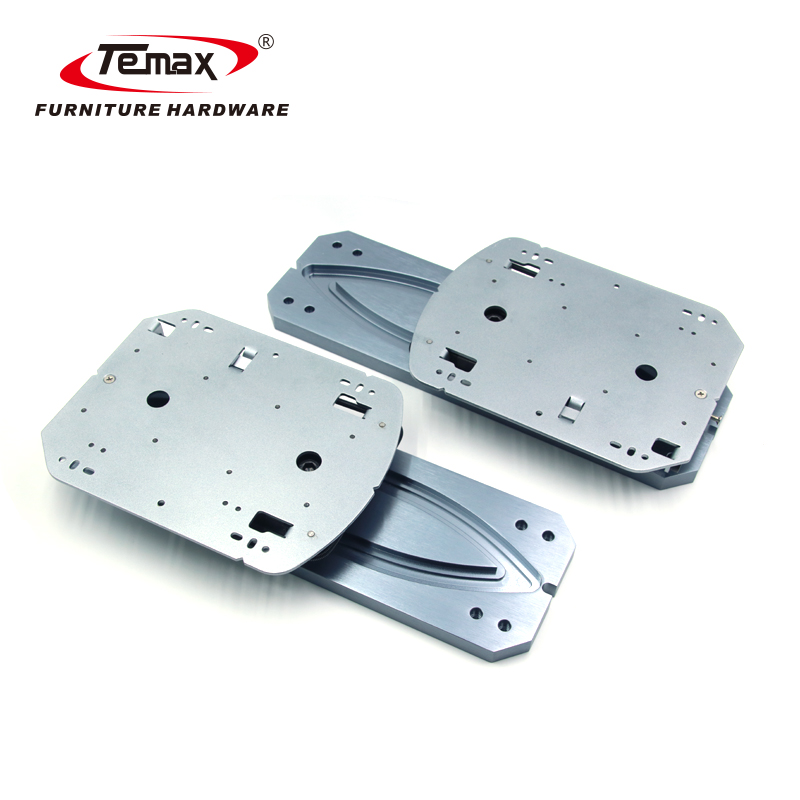
TEMAX W-A311 2025 New and High Quality Cabinet Accessory Multi Functional 360 Degree Rotating Furniture Cabinet Mechanism
- Rotation: Smooth 360° Kinetic
- Bearing Type: Hardened Steel Balls
- Chassis: Reinforced Structural Plate
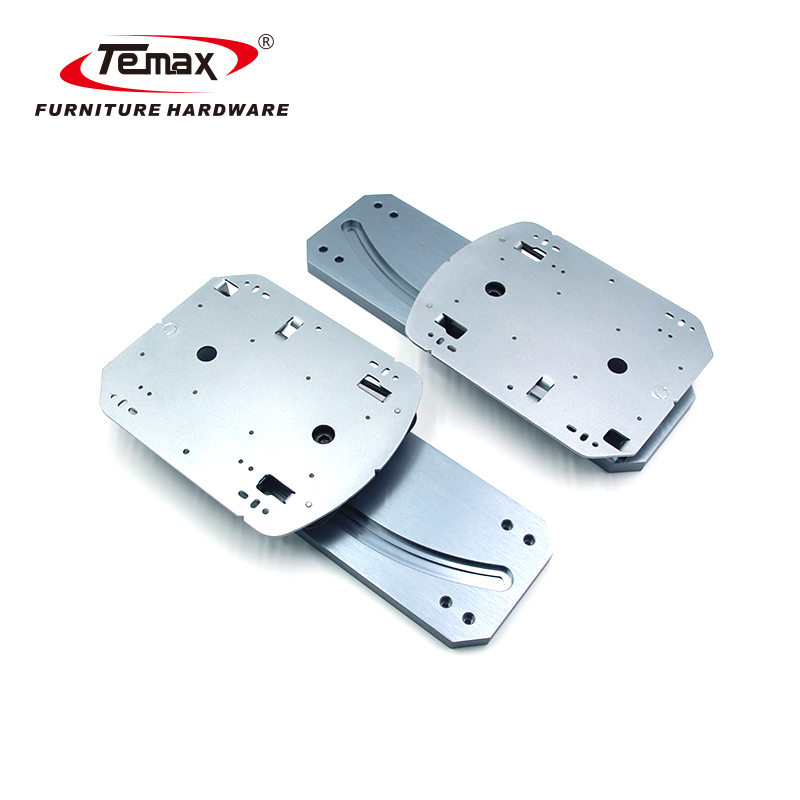
TEMAX W-A311 2025 New and High Quality Cabinet Accessory Multi Functional 180 Degree Rotating Furniture Cabinet Mechanism
- Angle Stop: 180° Mechanical Brake
- Cycle Life: 100,000 Operations
- Integration: Full Concealment Flange
Technical Whitepaper: Kinematics of CE Certified Heavy Duty Concealed Hinges
In monumental civic construction, luxury hospitality interiors, and urban high-rise fit-outs across Pyongyang, structural invisible door hinges are transitioning from decorative novelties to mission-critical engineering components. Hinges operating within high-traffic environments must withstand high operational cycles, structural deflection stress, and regional atmospheric extremes.
Architectural doors specified for commercial and governmental masterplans typically feature solid hardwood cores (dense Korean pine, oak, or birch), laminated acoustic deadening plates, and fire-resistant mineral substrates. When door panel weights exceed 80 kg and reach upwards of 160 kg, traditional surface-mounted butts or poorly engineered pivot hinges experience severe mechanical sag, resulting in latch misalignment, floor dragging, and air leakage that degrades acoustic and thermal performance.
Shanghai Huzo Hardware engineers heavy-duty invisible hinges compliant with the strict parameters of the European Standard EN 1935:2002. Under this classification scheme, our heavy-duty series achieves Grade 11 through Grade 14 classifications, verifying structural stability through a rigorous 200,000-cycle continuous mechanical test. Unlike conventional zinc-poured hinges that shear under eccentric torsion loads, our concealed assemblies feature a multi-axis kinematic link structure fabricated from cold-forged stainless steel (SUS304) and high-density ZAMAK-5 zinc alloy.
| Performance Parameter | Standard Commercial Grade | Huzo Heavy-Duty EN 1935 Class | Engineering Advantage in Service |
|---|---|---|---|
| Static Load Rating (3 Units) | 40 kg – 60 kg | 120 kg – 160 kg | Prevents long-term sagging on solid acoustic timber doors. |
| Fatigue Resistance Cycles | 50,000 cycles | 200,000 verified cycles | Extends building life-cycle without operational maintenance. |
| 3D Alignment Tolerance | Single plane (±1.0 mm) | Vertical ±2.5mm / Horiz ±1.5mm / Depth ±1.0mm | Permits micro-calibration after seasonal timber expansion. |
| Fire Resistance Boundary | Uncertified | EN 1634-1 Fire-rated up to 60/120 min | Meets state safety mandates for fire-break partitioning. |
| Internal Damping System | External spring clips | Sealed dual-cylinder hydraulic piston | Silent, soft, and controlled 180° swing dynamics. |
The secret behind true invisible door performance lies within the seven-pivot kinetic linkage. When closed, the hinge body recedes entirely within precision CNC-routed mortises in the door leaf and frame jamb. The precision tolerances maintained within Huzo’s multi-joint mechanism eliminate clearance gaps, allowing flush architectural aesthetics where the door seamlessly blends into timber wall paneling, acoustic textile cladding, or minimalist stone veneers.
Architectural Deployment Across Pyongyang’s Urban Landscape
Pyongyang’s continuous architectural expansion demands building materials capable of balancing neoclassical grandeur with modernist functionalism and extreme climatic endurance.
Songsin-Songhwa & Hwasong Urban Masterplans
The massive 50,000-unit residential development pipeline across the Songhwa and Hwasong districts introduces contemporary modular layouts. Huzo’s 2D and 3D concealed hinges provide the spatial optimization necessary for high-density luxury apartments, enabling clean architectural lines, flush hidden closets, and heavy timber entrance partitions that eliminate bulky external hardware.
Civic & Administrative Conference Halls
Governmental ministry offices, plenary meeting halls, and state research institutions require acoustic isolation and structural security. By integrating CE-certified heavy-duty invisible hinges with perimeter acoustic seals, meeting room portals achieve up to 45 dB sound reduction ratings without hardware interference on the acoustic gasket compression perimeter.
International Hospitality & Diplomatic Facilities
Renowned hospitality complexes such as the Koryo Hotel, Yanggakdo International Hotel, and foreign diplomatic residencies in Munsu-dong require dependable hardware. Concealed hydraulic hinges deliver silent soft-closing motion, preventing door slamming caused by seasonal cross-drafts while preserving the luxurious aesthetic of expansive suites.
Museums, Exhibition Palaces & Theatres
Monumental cultural edifices such as the Grand People’s Study House, the East Pyongyang Grand Theatre, and national art galleries demand continuous paneling continuity. Heavy-duty invisible door hinges allow oversized display cases, wall-matching secret service doorways, and library archive doors weighing over 140 kg to swing effortlessly with zero exterior visual footprint.
Extreme Sub-Zero Thermal Tolerance
Winter in Pyongyang frequently drops below -15°C to -20°C, accompanied by dry, freezing continental air masses, followed by humid summer monsoons. Conventional hydraulic door closers freeze and seize up during winter months. Huzo invisible hydraulic hinges utilize synthetic anti-freezing aviation-grade hydraulic fluid with a viscosity index exceeding VI 180, maintaining smooth dampening speeds across seasonal shifts.
High-Grade Joinery & Bespoke Cabinetry
In specialized interior woodworking and fine architectural joinery, the TEMAX W-A311 rotating mechanisms unlock full 180° and 360° fluid revolutions. Ideal for concealed rotating bar units, display pillars, and dual-sided media storage partitions within elite executive lounges and architectural showpieces.
Hardware Specifications & Architectural Trends in the DPRK Capital
The pace of building construction in Pyongyang over the past five years highlights a distinct evolution toward architectural minimalism, geometric symmetry, and high-performance building envelopes. State construction bureaus and design institutes are modernizing construction standards to emphasize sustainability, life-cycle longevity, and spatial fluidity.
1. Elimination of Surface Hardware (The Flush-Fit Doctrine): Historical Soviet-era and post-war neoclassical architecture relied on exposed iron barrel butt hinges that suffered from premature rust and paint encrustation. Current interior design schemes specify concealed frameless doors that align flush with plasterwork or continuous timber veneer. CE-certified heavy-duty invisible hinges provide the required structural stability while completely disappearing when closed.
2. Counteracting Wood Movement in Severe Climates: Timber species indigenous to the Korean peninsula and neighboring northeastern forestry reserves, such as red pine (Pinus densiflora) and Mongolian oak (Quercus mongolica), exhibit substantial volumetric shrinkage and swelling between dry sub-zero winters and sweltering summer monsoons. When timber doors expand by 2 to 3 millimeters, standard hinges bind or fail to latch. Huzo's 3D-adjustable concealed hinges allow facility managers to recalibrate door alignment on three independent Cartesian axes (height, lateral gap, and gasket compression) using a single hex wrench without dismounting the heavy door panel.
3. Dual-Action Soft Closing and Concealed Door Dampening: Heavy architectural doors pose safety risks when exposed to rapid pressure differentials caused by centralized HVAC activation or exterior wind corridors. The integration of concealed hydraulic pistons into invisible hinges ensures a controlled 180-degree closing motion, bringing doors weighing over 100 kg to a gentle, silent rest without secondary overhead closers that disrupt ceiling lines.
Why Major Contractors Partner with Shanghai Huzo Hardware
Backed by 18 years of technical export capability, automated metallurgical manufacturing, and independent verification by leading European certification bodies.
Frequently Asked Questions: Sourcing Hinges for Pyongyang Projects
Essential technical, regulatory, and logistics details for construction managers, state trading corporations, and architectural ironmongery specifiers.
Pyongyang experiences severe winter minimums dropping below -20°C. Standard commercial hydraulic dampers often freeze, causing seals to rupture and fluid to leak. Huzo's CE-certified hydraulic invisible hinges are engineered with aerospace-grade synthetic damping fluid rated to -35°C without crystallization or viscosity collapse. The dynamic internal O-rings are molded from high-density fluorosilicone elastomer (FVMQ), maintaining flexibility and preventing fluid leakage under extreme thermal contraction.
We provide streamlined trade terms including FOB Shanghai, CFR, CIF Nampo, and multimodal overland freight terms (FCA/CPT via Dandong–Sinuiju rail and truck border crossings). Shipments are packaged in reinforced export cartons packed inside fumigated, moisture-sealed plywood crates with desiccant packs to prevent condensation rust during maritime transit or customs staging in seasonal humidity.
Hinge quantity is determined by door width, height, and gross mass. For standard interior doors (up to 2100 mm height, <60 kg), two hinges are adequate. However, for Pyongyang monumental public buildings or acoustic conference doors exceeding 2400 mm in height or weighing between 80 kg and 120 kg, we mandate three hinges installed in an uneven distribution: two hinges placed near the top (separated by 250 mm to resist high tensile cantilever forces) and one hinge positioned at the bottom to counter compressive thrust. For doors between 120 kg and 160 kg, four hinges must be specified.
For public edifices and residential apartments, we provide multi-layer electroplated finishes including Satin Nickel, Pearl Chrome, Deep Matte Black, and PVD Brass. The base ZAMAK-5 zinc chassis is copper-plated followed by a nickel barrier and high-durability clear acrylic electrophoretic lacquer. Our components endure over 96 hours of continuous neutral salt spray (NSS) testing per ISO 9227 standards, preventing surface pitting, oxidation, and galvanic degradation.
Yes. We support modernization initiatives at state-run joinery factories and millwork workshops by supplying 1:1 scale steel routing jigs, CAD 2D/3D BIM models (.DWG, .STEP, .IFC), and exact G-code milling coordinates for 3-axis and 5-axis CNC timber processing centers. This ensures pocket recesses are cut with zero tolerance deviation, ensuring rapid on-site assembly and structural alignment.
Equip Your Architectural Masterplan with Certified Hardware
Request technical specification sheets, EN 1935 CE test certificates, CAD mounting templates, and complete wholesale catalog pricing for commercial projects across Pyongyang.
Get Catalog